 Sacred Drop
Learn the basics of Port with Oscar of Vinhos Oscar Quevedo
In my recent trip to Porto and then into the Douro River Valley, I had a chance to sit down with a good friend, Oscar Quevedo. He teaches us the basics of Port 101.
Oscar’s family owns and runs Quevedo Port Wine, which you can visit in Porto, Portugal. His Port Wine Cellar is located across the riverfront of Porto, in Vila Nova de Gaia.
For more information, visit their website at Quevedo Port Wine.
Chin Chin!
Make sure to check out the most recent posts on Porto and Port wine on Sacred Drop.com
Why Wine? The Examiner.com Interview
Posted on January 14, 2014
Recently I was interviewed by the Examiner.com on why I chose to enter the wine industry. When you start talking to the people in the wine industry, you realize that they are the true gems of this industry. I am reprinting the story that was printed in the Examiner.

April Yap-Hennig
This is the first in a new series to introduce you to interesting people in the wine industry. For many, the journey into wine is not only intriguing but often quite an adventure. These talented individuals are what make the wine industry what it is today so follow this series to meet this group of passionate people who have dedicated their lives to wine.
An interview with April Yap-Hennig, Founder of Sacred Drop, a travel and wine blog
Examiner: Was there a specific wine, moment or place that unlocked your passion?
April Yap-Hennig: It was during my study abroad in Spain when I was 19. I met a young boy whose father owned and managed a plot of land that he later sold the grapes to Rioja Alta, one of the oldest Rioja wineries in the region.
He had insisted on doing a nice dinner together, which we cooked and he brought over a beautiful bottle of a Rioja Alta, which was specifically made from all the farmers from whom they purchased grapes. They then made a special release that they provided only to these vintners, which I was lucky enough to try that night.
It was then that I realized what great quality wine is supposed to taste like and it opened my eyes to this industry. The relationship may not have lasted but his impact on the rest of my life did.
What did you study in school and what were you doing before you started in the wine industry?
I studied Communications, more specifically Public Relations in Undergrad. After working for four and half years in Los Angeles in Public Relations, I decided I needed something more, PR was only one part of the marketing mix.
I then went on to study at Purdue University and obtained my MBA with a focus in Marketing and Human Resources. It was obvious from the moment I started that Marketing had always been my true calling.
I was then recruited to work for Eaton Manufacturing, where I worked for another four and half years in The Netherlands, Germany, and Switzerland. I was the first of their European Marketing Leadership Development Team. These are people they train in multiple areas of the company, Electric, Hydraulic, Truck and Automotive, and Aerospace. They are basically grooming you to be upper management, running the company one day.
I loved working for them but my true calling came when I saw the opportunity to return to my beloved and not forgotten Rioja. It came in the form of advertisement for a two year Masters of Science in Viticulture and Enology at the University of La Rioja, in the exact same town, in the exact same university that I had studied in back when I was 19.
I applied to the program and the minute I was accepted, my husband and I quit our jobs in Switzerland and moved to Spain. I then went on to help smaller boutique wineries with their marketing and export plans while I went to school. It was such a wonderful time and such a great opportunity to jump into the industry.
I knew that in order to get into the wine industry, I had to show the dedication through education in order to break in.
How has being in the wine industry changed you?
I’m not sure the wine industry has particularly changed me as much as I keep wanting to change it. I see so many opportunities that are employed in other industries that could so easily be applied in this industry. It is a matter of taking that leap that I feel sometimes companies, people, are afraid to do.
It’s human nature to not want to change but after living in seven different countries and numerous more moves, I know that change can sometimes be the catalyst to something better.
Has it changed me? Yes, I’ve become a lot more humble, I will do everything from the most menial of tasks to the most complex and strategic. Generally in the corporate world, you are meant to be one part of the working machine and leave the rest to others to complete.
The difference here is that you are part of what keeps that working machine running at full speed, jumping in wherever necessary to help out in any way possible. In many ways, there are benefits to both but being able to wear many hats and then one as needed can give you the skills you need to succeed in any industry.
What’s your favorite part of being in the wine industry?
The people, are by far my favorite part of the industry. In particular the original winemaker/owners who have the entrepreneurial spirit to get out there and plant some vines and see what happens. Many of them come from so many different backgrounds such as Foreign Service to Corporate Directors.
Many saw this as an opportunity to come back down to earth, play in the dirt, come back to something simpler. I believe in a way, I became a part of this industry for the same reasons. It is not necessarily the most profitable business, so much of it is up to nature to dictate your future. For those that plan ahead and use the tools and skills available to them, they succeed but I can say it is never easy and it can be very hard to be profitable.
My second favorite, the availability of so many different types of wine. I got into this industry for the wine, the passion of it, the passion of people behind it and the culture that goes with it.
I find it fascinating that a single cluster of fruit can become a multi-million dollar industry in the world. In the end, it’s a grape. But it evolves into something so delicious and delectable that it’s stirs passions in more than just a few people.
Looking back, was there something in your past that led you to wine?
Wine is a passion of mine and I hope I can have as much of an impact on the industry as it has had on me. Now I am looking for my next adventure in Oregon!
April’s background: www.about.me/aprilyaphennig
Travel and Wine Blog: www.sacreddrop.com
Twitter: @sacreddrop https://twitter.com/SacredDrop
Facebook Page: https://www.facebook.com/SacredDrop
LinkedIn: www.linkedin.com/in/aprilyaphennig/
Porto, the Gateway to the Douro Wine Region
Porto, formerly known as “Portus Cale” by the Romans, latin for Port of Cale, is now known as Oporto (The Port) by the locals following the Reconquest in AD 1000. This city is full of Old-World charm with its red-tiled roofs, soaring bell towers, extravagant baroque churches, and stately buildings tumbling down the hillside to the River Douro (Rio Douro). Porto is one of Europe’s oldest centers and was registered as a World Heritage site by Unesco in 1996.
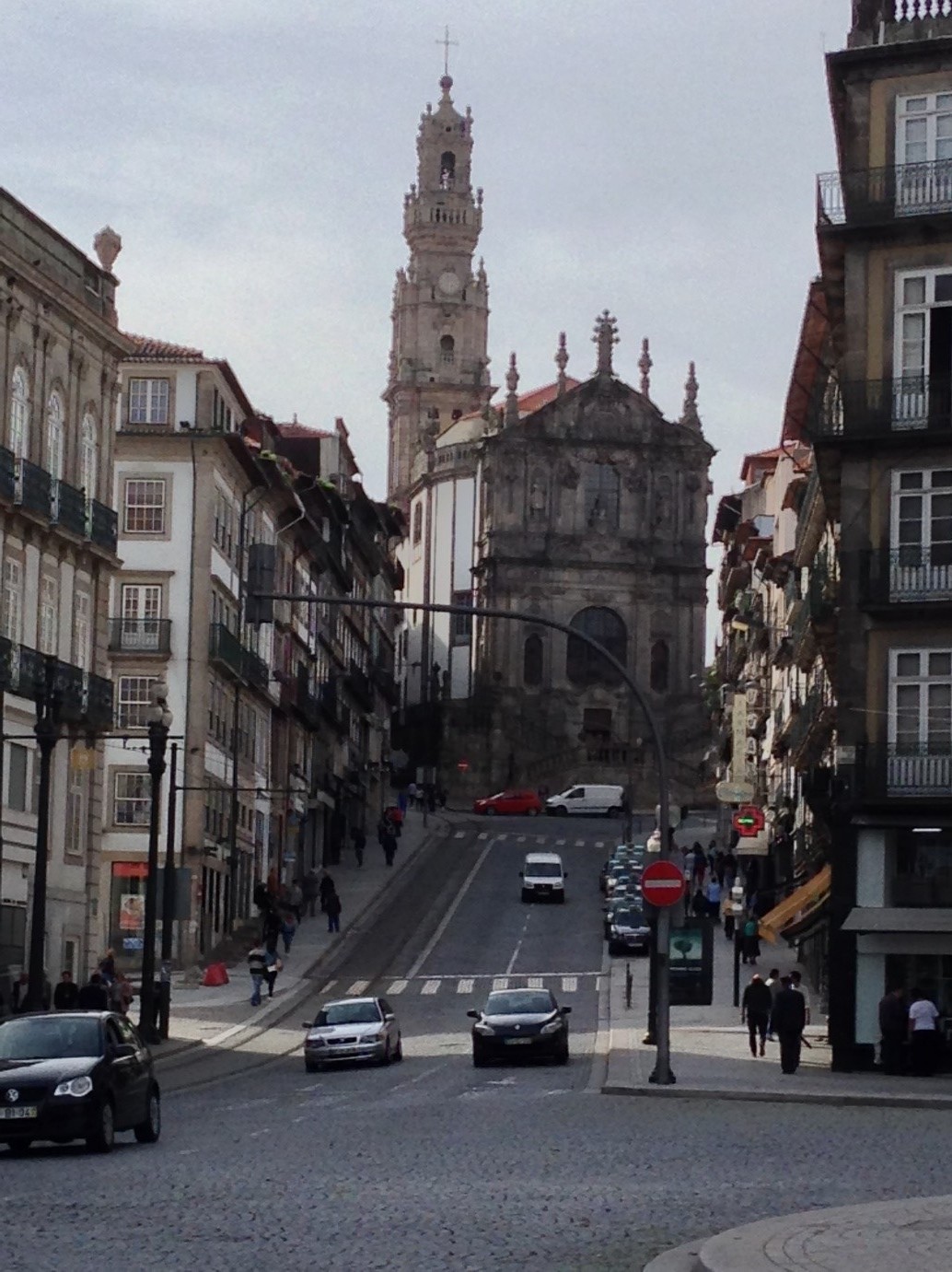
Porto of “Portucale”
Fun fact: Did you know that Porto put the “Portu” in Portugal? In AD 1000, after the reconquest of Portugal from the Moors, the city’s name was made the name of the new country,“Portucale.”
I personally love the beauty of this town, and on my first real visit to this town, I marveled at the historical and modern significance that it had on the wine industry. Porto is famous for its export of Port wine; however, this region has so much more to offer than just Port wine. Indeed, Porto is a vibrant city with amazing food and culture.
A little wine history of Porto:
While it is thought that grapes have been grown in Portugal for over 4,000 years, it wasn’t until the 14th century that Portugal really became known for its wine trade with England. This wine trade later expanded in the 17th century to other countries such as Scotland and the Netherlands.
Port Wine Basics:
Port wine, also known as Vinho do Porto, is a Portuguese fortified wine made exclusively from grapes from the Douro Valley in northern Portugal. It is typically a sweet red wine that is often enjoyed with desserts or cheeses. There are now many different types of port: white port, rose port and the traditional red port.
Before I delve into everything port, I want to talk about Porto. I’ve covered Port wines in this article.
The city of Porto:
Porto—or Oporto, as I like to call it—serves in many ways as the historical and cultural gateway to the stunning Douro River valley. It is worth it to stay a few days here before setting off into the Douro river valley.
Porto is a compact city with rolling hills, so be prepared to walk up and down quite a bit. I would recommend a great pair of walking shoes. As I visited the city, I created an “Oporto Must See List” which I saved on my Foursquare account. (I love using this tool because it maps it all out for me and as people provide me with recommendations, I add it to my list and can find it instantly.)

Ribeira of Porto looking over at Vila Nova de Gaia at night
Porto is technically divided into three parts:
Ribeira, which is Porto’s riverfront center with a gorgeous view of all the Port wine houses across the river in Vila Nova de Gaia. This is a stunning neighborhood with great riverside restaurants and outdoor patios. It can be very touristy, so be prepared to look at menus and pricing first before sitting down. If you are a runner or a walker, you can run all the way from the port at the river’s edge inland as well as out to the sea along a busy road. I would recommend going early in the morning before the traffic picks up.
Places to visit:
- Palácio da Bolsa, R. de Ferreira Borges 55, next to the Church of St. Francis —This stunning building is a must-see. It has some lavishly decorated rooms, including the Arabian room, which was inspired by Granada’s Alhambra.
Place to eat:
- Bacalhau Restaurant—This tiny little place is hidden on Rua de Cima do Muro Bacalhoeiros 153. It is right on the river, and they offer some great dishes of seafood and in particular Bacalhau, also known as dried and salted cod, the nation’s national dish. They also have a great wine menu. You can sit outside or inside, but the views are worth waiting for a table outside. +351.960.378.883

The Historic Sao Bento Train Station
City Center, which is located directly up from Ribeira, on the top of the hillside. I would consider this area to be a more realistic and less touristy area of Porto, especially if you are considering doing some shopping.
Places to visit:
- Sao Bento Train Station, Praca Almeida Garret: This train station, opened in 1916, is still in operation. The entry hall to the train station is covered in over twenty thousand vivid blue “azulejo” tiles, showing the historical and folk scenes of the Douro River region; the tiles were painted by Jorge Colaco in the 1900s. Throughout northern Portugal you will be able to find beautiful blue “azulejo” Portuguese tile that you can take home as a souvenir.
- Clérigos Church and Tower, Rua S. Felipe de Nery: Are you interested in seeing the beautiful city from above? If so, brave the 225-step climb to the top of this towering landmark of Porto. Afterwards, stop over at the Clérigos Vinhos & Petiscos for a small bite and great wine.
Places to eat and drink:
- Bella Doce Praça Almeida Garrett 11, is a great place to sit down and enjoy some of the local pastries and amazing coffee at a phenomenal price. At less than a Euro, you can enjoy a beautiful shot of espresso. It is located directly across from São Bento Train station and has white umbrellas covering the outdoor tables. The entrance has a white awning. It is also directly behind the large green magazine kiosk and by the entrance to the São Bento Metro stop.
- Clérigos Vinhos & Petiscos, Rua das Carmelitas, 151, is a cute wine bar that offers a really good selection of Portuguese wines and aperitifs. It is located in the middle of this very modern-looking outdoor mall with outdoor and indoor seating. I went in the middle of the afternoon, after lunch and before dinner, and enjoyed a small three-bite nibble and spent 3 euros for a Reserve glass of Douro wine. They serve regular-size meals for lunch and dinner.
- Café Aviz, Rua de Aviz 1, is a great no-fuss cafeteria where you can get a reasonably priced meal. I’ve heard the francesinha, which is a sandwich made with a number of different meats, roast beef, different sausages and bologna, then covered with melted cheese, and a beer-and-tomato sauce. It is then topped with an egg at some places and served with French fries. Be aware, it is a heart-attack type of meal but I would rather eat this than food at the millions of fast-food restaurants you now see. Click on this link for a fellow traveler’s experience with the Francesinha.
Vila Nova de Gaia
Now that you’ve stuffed yourself with this amazingly dense sandwich, let’s walk back down the hill and across the river to the Port wine center, Vila Nova de Gaia. This is arguably one of Porto’s main tourist attractions, the port-wine cellars (Caves do vinho do Porto). The Douro can be crossed by any of the six bridges that connect the two sides of Porto together. If you are walk as I would imagine you would after the Francesinha, cross via the Ponte Dom Luis I. The metro runs above it, and the cars and pedestrians can cross on the lower level directly from the Ribeira water front.
Vila Nova de Gaia has always played a very important role in the history of the port wine business. All port wine that was to be exported outside of Portugal, had to first pass through Gaia. It would travel from the Douro Valley, almost 100 kilometers, approx.. 62 miles down river to Gaia, where it would be stored and aged before it was shipped out. This is where you will find a number of port houses that are definitely worth a visit. Here are a few of my recommendations.
Places to visit and taste:
Quevedo Port Wine Lodge, Rua de Santa Marinha, 77, Vila Nova de Gaia: This family-owned port wine business was officially founded in 1991, but the history of the land and the family goes back even further. The Quevedo Vineyard is located in João da Pesqueira, a small town in the heart of Douro Valley, where they make still wines as well as port wines. Oscar, the most well known and recognized member of the family, acts as the face of Quevedo. He is also the member of the family whom you are likely to see in the tasting room, while his sister, Claudia, the winemaker, is generally out in Douro making the wine. Oscar explains how port is made. I personally love his accent. Enjoy:
W. & J. Graham’s Lodge, Rua do Agro 141, Vila Nova de Gaia: W & J Graham’s was founded in 1820 by the Graham brothers from Scotland. The lodge itself was built in 1890, where you can now visit, taste, and tour the amazing facilities. I would highly recommend visiting this great lodge. W & J Graham’s now belongs to the prestigious wine group, the Symington Family, along with CockBurn’s, Warre’s, and Dow’s.
Porto Calém, Av. Diogo Leite, 344, Vila Nova de Gaia: Calém is the closest port lodge to the bridge and therefore makes it a great beginning or end stop. Established in 1859, Calém is one of the oldest port houses in Vila Nova de Gaia. In 2006 and 2008, they won the Best of Wine Tourism award for their architecture and wine tourism services. They offer daily tours and hold a number of events throughout the year. Since 1998, Calém is now a part of Sogevinus Fine Wines S.A., which also owns Kopke, Barros and Burmester.
Given that you’ve probably already drank quite a bit of port at this point, the only option is return to the City Center or go across the river and enjoy the night life and great food Porto has to offer. While I haven’t had a chance to visit all these places, I would recommend checking out my “Oporto Must See List” on Foursquare for more recommendations given to me by fellow travelers and locals.
After visiting Oporto for a few days, make sure you make it to the Douro River Valley. Stay tuned for a series of stories on Portuguese wine and travel.
Chin Chin!
 Sacred Drop