 Sacred Drop
A Foodie’s Journey through Denver in a Day
Posted on July 11, 2021 2 Comments


Stop 1: Breakfast
No trip to Denver is complete without a few food stops, and if you are a foodie like me, I would recommend starting with a hearty breakfast at Snooze AM.
If you haven’t heard of Snooze, then it’s time for you to try it. Snooze is my go-to breakfast place early in the morning. As the adage goes, “the early bird gets the worm;” in this case, if you arrive early to Snooze, you’ll beat the lines and get in fast. So literally, don’t snooze…or you’ll wait a good hour or so for your breakfast.
Snooze was started in Denver in 2006 and has now expanded to California, Arizona, and Texas. I personally love to start with their Straight Up or Spicy Bloody Marys or their fresh-from-the-tap Mimosas. Then I love to dive into one of two items, either their 3-Egg Omelets or their delectable Cinnamon Roll Pancake, the latter of which I always order on the side anyways and split it with those at the table. That is, of course, if I feel like sharing! You honestly can’t go wrong with any item on their menu.
Visit them at the Denver Union Station starting at 6:30 a.m. at 1701 Wynkoop Street, Suite 150, Denver, CO 80202. They are tucked inside the really cool and renovated Union Station.
Stop 2: Walk it off
Once you’ve filled your belly, it’s time to burn off some of those cholesterol-laden calories. I recommend enjoying the sights with a light walking tour with Denver Free Walking Tours. They start at 10 a.m. and meet at the Veteran’s Memorial off Lincoln Street, and they end at Coors Field. It is about a two-hour walk and covers about two miles. Thus it isn’t too much of a hike but it’s enough to get you going. If you are pushing around a stroller, it isn’t too hard to manage either. These tours run May 1st through October 31st, seven days a week; then from November 1st to April 30th, they run only on Saturdays and Sundays.

These tour guides work off their tips, so do tip them generously! The tour covers the State Capitol, the Civic Center, the Denver Art Museum, the U.S. Mint, Larimer Square, and 16th Street Mall, and finishes at the famous Coors Field. These are all the really essential places to visit while in town. This is indeed a great way to experience downtown without having to think too much about it.
Stop 3: Food Truck time!
Perhaps I shouldn’t have recommended a big breakfast, but given that you’ve now already walked some of it off, you can indulge once again. Do this at the Civic Center Eats, which is open 11 a.m. to 2 p.m. on Tuesdays, Wednesdays, and Thursdays from May 2nd to October 5th. It is Denver Metro’s largest gathering of gourmet food trucks and carts (23-25 food trucks to be exact). You can taste everything from local burgers to Cajun to Indian food and all the while enjoying live music and the beautiful setting of the Civic Center Park.
Stop 4: Nap or Drink…your choice
Yes, I said, take a nap. If you are lucky enough to be staying downtown or nearby, head back for a nap and enjoy a food-induced nap. Why? Because tonight you will be eating at one of the top James Beard award-winning restaurants, Rioja, and you’ll need room for this wonderful cuisine. However, before you do take a nap, make sure you’ve already booked your dinner reservations at Rioja.
If you are not able to nap, enjoy a beer back at Union Station’s Terminal Bar, which has a great line-up of Colorado beers, or enjoy a coffee across the way at Pigtrain Coffee Company, where you can experience phenomenal lattes.
Another great stop is a place where you can see all of Denver from a rooftop while enjoying a beer. Go to Tap Fourteen, on the rooftop of Hayter’s & Co, half a block from Coors Field, where you can choose from a rotating list of 70 top Colorado beers on draft! You can try out their great beer offerings from 11 a.m. to 2 a.m. Monday- Friday or start early on Saturday and Sunday at 10 a.m. with brunch. Tap Fourteen has many other activities and events; check out their homepage.
Stop 5: Award-Winning Dinner
Finally, the famous and historic Larimer Street located in Lower Downtown Denver (known locally as LODO) is where you will find a number of great restaurants besides my personal favorite mentioned earlier, Rioja. Perhaps this particular restaurant is a place I recommend because I am partial to (and have lived and worked in) the wine region in Northern Spain called La Rioja. However, Rioja (the restaurant) is actually a place where James Beard Award Winning Executive Chef Jennifer Jasinski and Tim Kuklinski bring together local and Mediterranean ingredients to create sophisticated plates. While the food is not typical of my favorite wine region in Spain, Rioja’s many food and wine offerings stand out on their own and create their own little piece of heaven.

At Rioja, I recommend trying their egg-yolk ravioli, which is deliciously divine and cooked to perfection. With a buttery dish like this, I would recommend pairing this with a wine with enough acidity to cut through the starch, butter, and yolks. A chardonnay or a pinot blanc would pair well with this plate, given the acidity and body typical these wines.
If you plan to go to Rioja, I would recommend booking via OpenTable in advance as this place is well sought after. They open at 5 p.m. for dinner and are located at 1431 Larimer Street, Denver, CO.
I hope you have enjoyed this day as much as I have!
In search of the perfect summer beer: Sour beer
Posted on June 4, 2021

When I first moved to Oregon, I was more of a lover of big, bold wines; I would also occasionally drink a light beer to quench my thirst on a hot summer day. It wasn’t until I went to a few beer festivals, met a few Oregon winemakers who also loved beer, and sipped a few other beers that I realized that there is such a huge world of beer out there to explore. I also learned from my years of working the wine harvests in Oregon that “in order to make a great wine, you need to have a great beer.” Ryan Harms of Union Wine Co. had once told me this when we worked side by side in the wine industry. I heard it again, over and over from other winemakers in the area, and I realized that at the end of the day, winemakers want nothing more than an ice-cold beer to quench their thirst after sipping and spitting out wine samples all day.
Initially, I was turned onto another big, bold, very Oregonian beer style, Indian Pale Ales (IPAs). IPAs are a whole other story, one which I will touch upon later in another blog post. I later went back to the more European style of beers, such as white wheat beers like Hefeweizen, then later to paler ones like lagers and pilsners. Finally, today, I’ve landed on sour beers.
 A little about sour beers. Sour beers can be made from pretty much any beer; however, most follow either traditional or standardized guidelines. Sour beers are intentionally made acidic, tart, or sour in taste. For those Oregon Pinot Noir drinkers who love acid, this may be the beer style for you.
In order to obtain a sour beer, beer brewers need to use wild yeast and bacteria strains such as Lactobacillus, Brettanomyces, and Pediococcus, none of which are generally allowed unless in a controlled environment.
I personally love a little “Brett” in my wine, cider, and obviously, beer. These beers generally satisfy my craving for sour patch kids candies, a hot-summer-day sipper, and a little more depth than just another lager. Not that there is anything wrong with lagers–I love those, too–but lately, I’ve been craving some good sour beers.
Sour beers rarely make an appearance in winter, so if you are adventurous, get them while you can in these upcoming summer months before they’re gone.
Below, I have summarized some information on the most common styles in order of taste preference. (Thank you, Wikipedia, for providing me with some backstory information.)
 Berliner Weisse is a beer that is popular in the summertime and meant to be enjoyed outside on a patio in the middle of a hot summer in Berlin. It is generally low alcohol, around 3% abv. and made sour using Lactobacillus bacteria. It is commonly sweetened with a green or red flavored syrup to balance out the tartness. Interestingly enough, it was when I lived in Berlin that this was my first taste of sour beers, and I had no idea that it was a sour beer. I really enjoyed it!
Gose (pronounced “go-suh”) is a top-fermenting beer that originated in Goslar, Germany. I had my first taste of sour Gose from 10 Barrel Brewing Co. in Portland and loved it. I have been in search of Gose since then. Goses have a lemon-/grapefruit-like tartness with a touch of herbal to them. This type of beer is generally characterized by the use of coriander and salt. It is then made sour by inoculating the wort with lactic acid bacteria before primary alcoholic fermentation.
Lambic beer is spontaneously fermented beer made in the Pajottenland region of Belgium and Brussels. I first tried a Kriek lambic beer when a friend told me that I had to try this sour cherry sweet beer. It is generally sweet as it is allowed to perform a secondary fermentation with fruit such as cherries (Kriek] or raspberries (Framboise). These are the most common lambics you are likely to taste. Honestly, I have only tried the European versions, but you can find a cherry lambic beer at Trader Joe’s. Interestingly enough, the wort is left to cool overnight in the koelschip [italicize] where it is exposed to the open air during the winter and spring, and then placed into barrels to ferment and mature. Most lambics are blends of several seasons’ batches, such as Gueuze, or are secondarily fermented with fruits, such as Kriek and Framboise.
American wild ale is generally brewed using yeast and bacteria strains in addition to standard brewer’s yeast. American wild ales don’t follow specific guidelines, unlike their European counterparts.
Flanders red ale descended from the English porters of the 17th century. It is first fermented using brewer’s yeast, then allowed to mature in oak barrels. It can later be blended with younger beer to adjust for consistency in taste, similar to the process used for a Solera Sherry.
To learn more about Solera Sherry, click here.
Oud bruin beer originates from the Flemish region of Belgium. Oud bruins differ from the Flanders red ale in that they are darker in color and not aged in wood. Consequently, this style tends to use cultured yeasts to impart its sour notes.
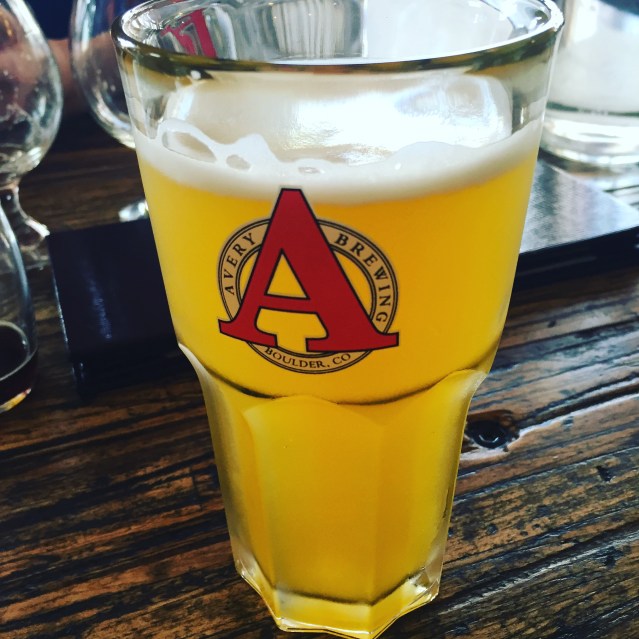 So if you are looking for that great summer beer, look no further then sour beers. Some of my favorites are from Avery Brewing, Deschutes Brewery, Ecliptic Brewing, Dry Dock, 10 Barrel, and River North. If you are in a store, just ask one of the store associates to help you find some great sour beers and they’ll direct you to the right beers. Enjoy summer in a glass! Cheers!
Juan Carlos Sancha: A Riojan Champion of Sustainable Viticulture
Juan Carlos Sancha was my professor at Universidad de la Rioja and later became my mentor and good friend. I am so proud of everything he’s done for Rioja and love when I see others recognizing his hard work and dedication to the wine industry. Felicidades Juan Carlos y Marian!


The World Tourism Organization’s fourth Global Wine Tourism Conference in Chile in December 2019 emphasized the role of wine tourism for sustainable rural development and launched a call to action.
UNWTO General-Secretary Zurab Pololikashvili said: “Wine tourism creates jobs and entrepreneurship opportunities. It touches all areas of the regional economy through its linkages to handicrafts, gastronomy and agriculture. There lies its great potential to generate development opportunities in remote destinations.”
Rioja wineries read his message loud and clear.
Today, over 400 Rioja wineries have a tourism program, increasingvisits to wine villages, generating jobs, promoting knowledge about wine culture, enhancing the wineries’ image and creating additional revenue streams. It’s a win-win situation for everyone involved.
However, challenges remain. Among them is attracting discerning wine tourists who have no shortage of choices of wineries to visit. The most forward-thinking wineries here are moving…
View original post 746 more words
 Sacred Drop